Who Can You Call?
If I aim to be an expert, I need more than my own experiences…so this summer each week I read research about what happens to athletes while they’re playing and after they retire. Most of it is boring academic writing that would put you to sleep faster than some bullshit bus ride through a random German countryside. But buried in there is what keeps making me look at my own career differently. This week I read three studies, and each one came at the problem from a completely different angle.
The first one was in Psychology of Sport and Exercise, done by Helena Hlasová and Noora Ronkainen out of the University of Bern. They looked at how elite athletes hold onto a sense of who they are as they walk away from sports. What was apparent, was that the identity work was already happening before these athletes retired…not some switch that flipped on the day they hung it up.
I think we’ve turned the whole identity after sports conversation into something that sounds like an athlete has to go find a brand new person the second their career ends. I’m pretty sure that’s NOT how it works. I spent most of my life becoming an athlete, with a huge chunk of who I am coming straight from basketball. I competed while living out of a suitcase, dealing with every kind of personality you can imagine, while figuring shit out alone. I’m not throwing that guy in the fucking trash because my knees won’t let me play anymore. It’s important to figure out which pieces of the athlete you take with you.
The second study was sent by a gymnast in our community. Ashley Montero and a group at Flinders University studied thirteen retired elite female gymnasts, zeroing in on sleep and mental health after their careers ended. They found huge shifts in lifestyle, social life, and physical activity after retirement, and almost no education or support around sleep and mental health during the transition. Their recommendation was to ease athletes out gradually, keep them physically active, and educate while it’s happening.
The sleep part is a crazy discovery. When I was playing, I knew where I had to be basically every hour of every day. Overseas, they’d hand us an itinerary telling us when the bus left, when we were eating, what time to be standing in the lobby with our bags. You live inside that structure long enough and you stop noticing it’s there. Then one day it’s just gone. I’ve always thought about retirement as losing basketball. I never once thought about what happens when the entire rhythm of your day vanishes right along with it. That study convinced me we need to be preparing athletes for that part too.
The third paper was in the Journal of Sports Sciences, out of Auckland University of Technology. The researchers looked at professional athlete pathways across boxing, rugby and basketball, including athletes who move overseas to compete. They studied social support specifically. Their conclusion was pretty simple…the most effective support relationships were the ones built on genuine care, trust, showing up, and understanding what the athlete truly needed. The ones that broke down were the ones that got lost in institutional roles and outside pressure.
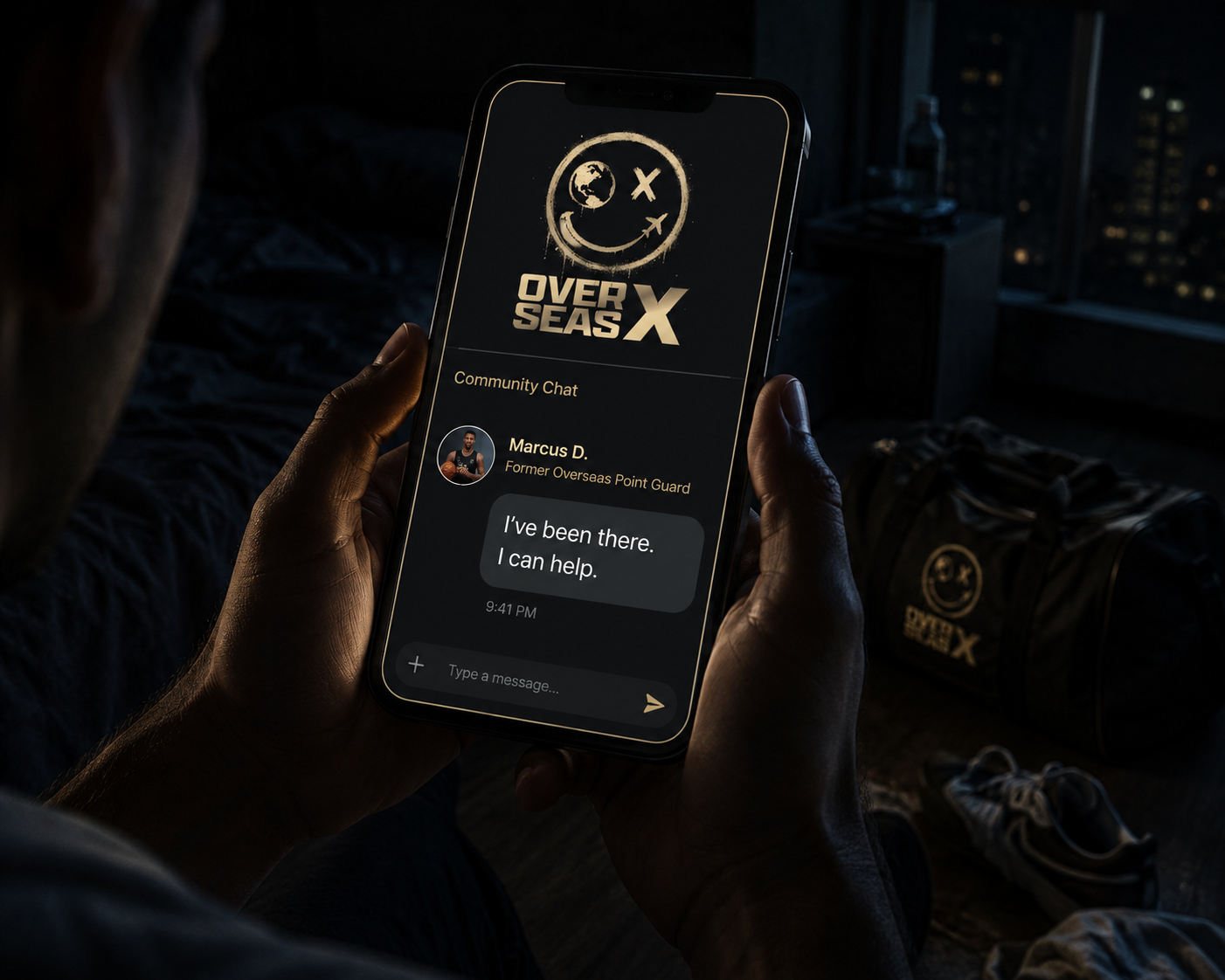
That kind of blew my fucking my mind…but it makes sense because it describes almost every person who’s supposed to be in your corner overseas. Your agent gets paid when you sign, so their advice is tied to you taking a deal. Your coach answers to a front office that will cut you the second the numbers dip. The club has a budget and a win column and you’re a line on both. None of those people are villains, but every one of them needs something from your career, and that changes what they’ll tell you. Think about what that means for you…you’re in a country where you don’t speak the language, you just had the worst game of your life, and you’re sitting alone at night trying to figure out if you’re about to get cut. Who do you call? Your agent is going to tell you whatever keeps you signed. Your coach is the one deciding whether to cut you. So you keep it to yourself and harp on it, because the people around you are the last fucking people you can be honest with. That’s why a room full of people who already played, who want nothing from you except for you to land on your feet, and who are still there whether you signed this year or not, is so important! That’s the whole reason a community like ours exists.
Being able to chat with a 33 year old who was cut twice, switched agents, got screwed out of their money, played in six countries, and knows exactly what that phone call in your hotel room feels like because they made it themselves. Sometimes you need the information and sometimes you need the person who already lived it and can tell you that you’re going to be ok.
That’s what I pulled out of the research this week. I’m going to keep reading it, because every week I find another piece of this life that makes me rethink my own, and every week it gives me another idea for how we do a better job getting athletes ready for all of it, including the day it ends.
With OverseasX, you’ll never have to walk this journey alone.
Sources I read this week:
Hlasová & Ronkainen, “Identity work in elite athlete retirement,” Psychology of Sport and Exercise
Montero et al., “Sleep and mental health in retired elite gymnasts,” Psychology of Sport and Exercise
Auckland University of Technology, “Social support across professional athlete pathways,” Journal of Sports Sciences