What I Read This Week How many athletes are leaving before they’re finished?
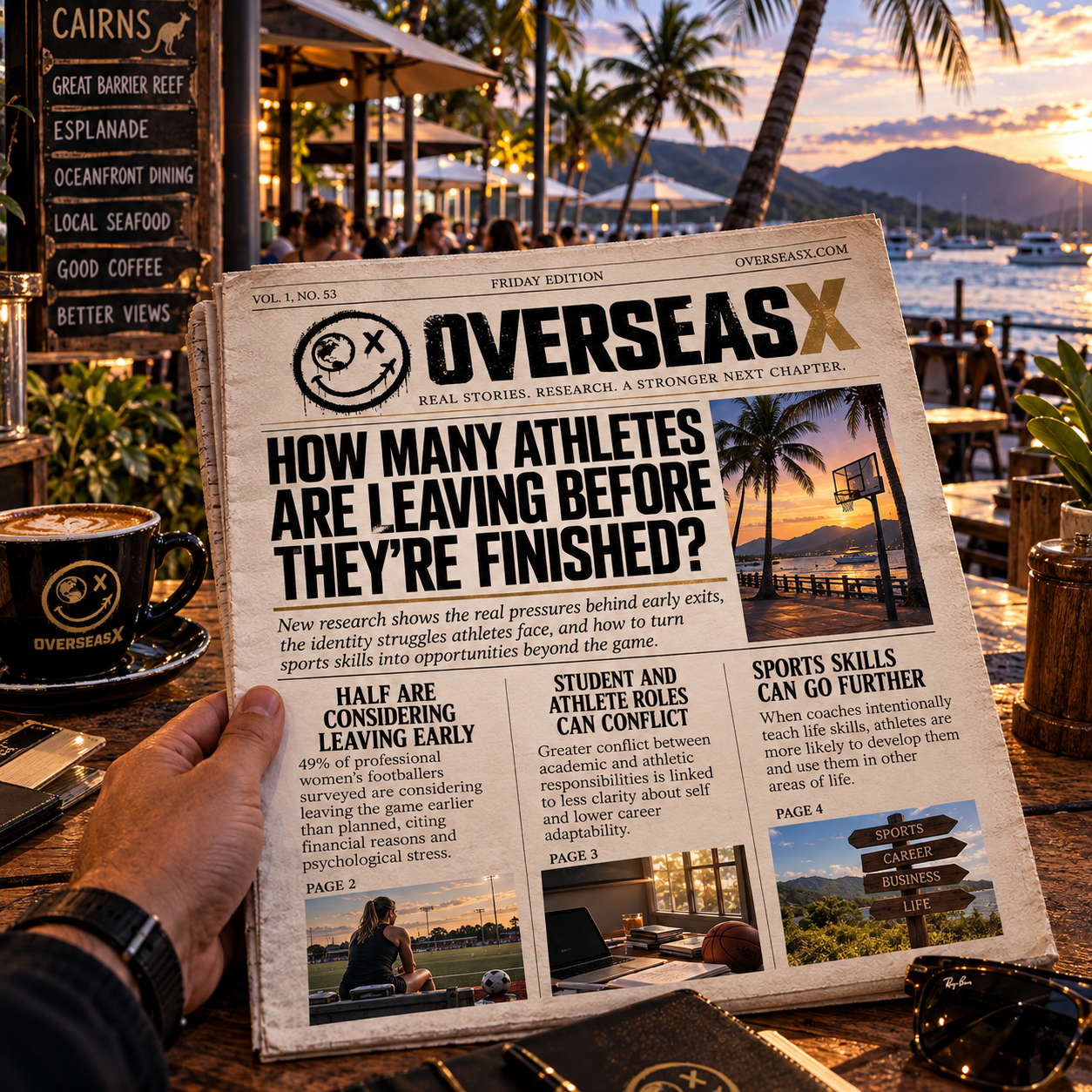
I read a report this week that said 49 percent of the women’s footballers surveyed by FIFPRO were considering leaving the game earlier than planned. Of those players, 59 percent cited financial reasons and 46 percent cited psychological stress.
I sat there thinking about how many times I considered being done with basketball while I was still perfectly capable of playing it.
That’s the part people don’t always understand. You can love the game and be completely fucking exhausted by the business of playing it. I had seasons where the basketball was the easiest part of my day. The rest was figuring out if I was getting paid, what was happening with my knee, or how the hell I was going to get through another few months on the other side of the world.
And I know plenty of players who dealt with the same shit. Guys who could still play, who wanted to keep playing, but eventually got tired of everything that came with being a professional basketball player.
The FIFPRO report is about women’s football, not overseas basketball. And considering leaving isn’t the same as retiring. But I recognized the frustration immediately.
Something else in that report bothered me. Only 56 percent of the players surveyed had employment contracts, and only 13 percent received a pension from their clubs. The median monthly salary was $1,669.
Think about that for a minute. These are professional athletes, people who have spent most of their lives trying to reach this level, and many of them are still dealing with the kind of financial uncertainty that makes it difficult to imagine doing this for another five or ten years.
And I’m supposed to believe that every athlete who walks away has simply reached the end of their career?
I don’t buy that.
Then I read a study involving 414 college athletes in Taiwan. Researchers looked at the conflict between being a student and being an athlete, and how that related to their understanding of themselves and their ability to adapt to future career demands.
They found that greater conflict between academic and athletic responsibilities was associated with less clarity about who they were. That clarity was also linked to stronger career adaptability four months later. It doesn’t prove one caused the other.
But it made me think about being a college athlete and hearing people tell us to prepare for life after basketball while basketball took up nearly every hour we had.
I was a four year starter at Monmouth. I loved playing Division I basketball, and I wouldn’t trade those years for anything. But I also remember how much of my life revolved around practice, lifting, games, travel and trying to keep up with school.
Everybody tells you how important it is to have a backup plan. Okay, great. When exactly are we supposed to figure that out?
And the funny thing is, when you’re that age, you’re not sitting around thinking about retirement. You’re trying to get better. You’re trying to win games. You’re trying to get somebody to give you an opportunity to keep playing.
I certainly wasn’t spending much time thinking about what I wanted to do when I was 40.
The third study came out of South Korea and involved 431 student athletes. Researchers examined how coaches intentionally teaching life skills related to athletes developing those skills and using them outside sports.
They found a positive association. Athletes whose coaches emphasized life skills reported developing more of them and applying them elsewhere. That doesn’t prove the coaching caused those outcomes, but I found the idea interesting.
Because I learned a shitload playing professional basketball in sixteen countries.
I learned how to communicate with people who didn’t speak English. I learned how to deal with uncertainty and make decisions when I didn’t have all the information. I learned how to walk into a locker room full of strangers and somehow figure out how to work together.
I also learned how to survive in an apartment where the electricity randomly disappeared, how to find food when I couldn’t read a single thing on the menu, and how many different ways a general manager could tell you your paycheck was coming tomorrow.
I’m not sure any of that was in the college recruiting brochure.
But seriously, those experiences taught me things I use today. And for a long time after I stopped playing, I didn’t really understand how valuable some of them were.
I just thought I had spent nine years playing basketball.
Nobody ever sat me down and helped me understand how much more I’d been doing.
And I wonder how many other athletes feel that way when they finish playing. You’ve spent years developing abilities that could help you in another career, but you have no idea how to explain them to somebody who has never been inside a professional locker room.
Reading all three pieces together, I kept coming back to that FIFPRO report.
Because I think there’s an important conversation we’re missing when we talk about athlete career transition.
What about the athletes who don’t want to transition yet?
What about the player who wants another five years but is getting worn down by unpaid salaries, terrible contracts, injuries, financial uncertainty and the constant pressure of trying to stay employed?
I think about that a lot with OverseasX. We’re putting together an orientation course for college athletes, and part of what I want them to understand is what they’re getting themselves into if they decide to pursue professional basketball overseas.
I want them to hear about the incredible experiences because there are plenty of them. I wouldn’t have written a book about my career if I didn’t love what basketball gave me.
But I also want them to understand the business. What happens when you don’t get paid? Who do you call when something goes wrong with your contract? What do you do if you get hurt and the team suddenly decides you’re somebody else’s problem?
Those are conversations I wish I’d had before I started playing professionally.
And while they’re going through all of it, I want them to recognize that they’re learning things about themselves that will matter long after basketball.
I don’t expect an orientation course or a community to fix everything that’s wrong with professional sports. Some of these problems require teams, leagues and the people running them to change how they operate.
But I do think we can help athletes understand what they’re dealing with and make sure they have somebody to talk to before things become a complete disaster.
I keep wondering about that 49 percent.
How many of those women still love football? How many still have the ability to play professionally for years? How many are considering walking away because the business has made something they once loved feel like more trouble than it’s worth?
I don’t know the answers, and the report doesn’t tell us how many will leave.
But I know I’ve felt that way about basketball.
And I’d bet an awful lot of overseas players reading this have too.
The three pieces I read this week
FIFPRO, 2026 Global Employment Report on Women’s Football
https://www.fifpro.org/en/articles/2026/10/womens-players-considering-leaving-game-early-for-financial-and-mental-health-reasons-fifpro-report-findsCollege athlete identity conflict and career adaptability, Taiwan
https://www.frontiersin.org/journals/sports-and-active-living/articles/10.3389/fspor.2026.1877707/fullCoaching, life skills development and transfer among South Korean student athletes
https://journals.sagepub.com/doi/10.1177/17479541261421100