Why American Investors Are Betting Big on Italian Sports…and What Comes Next
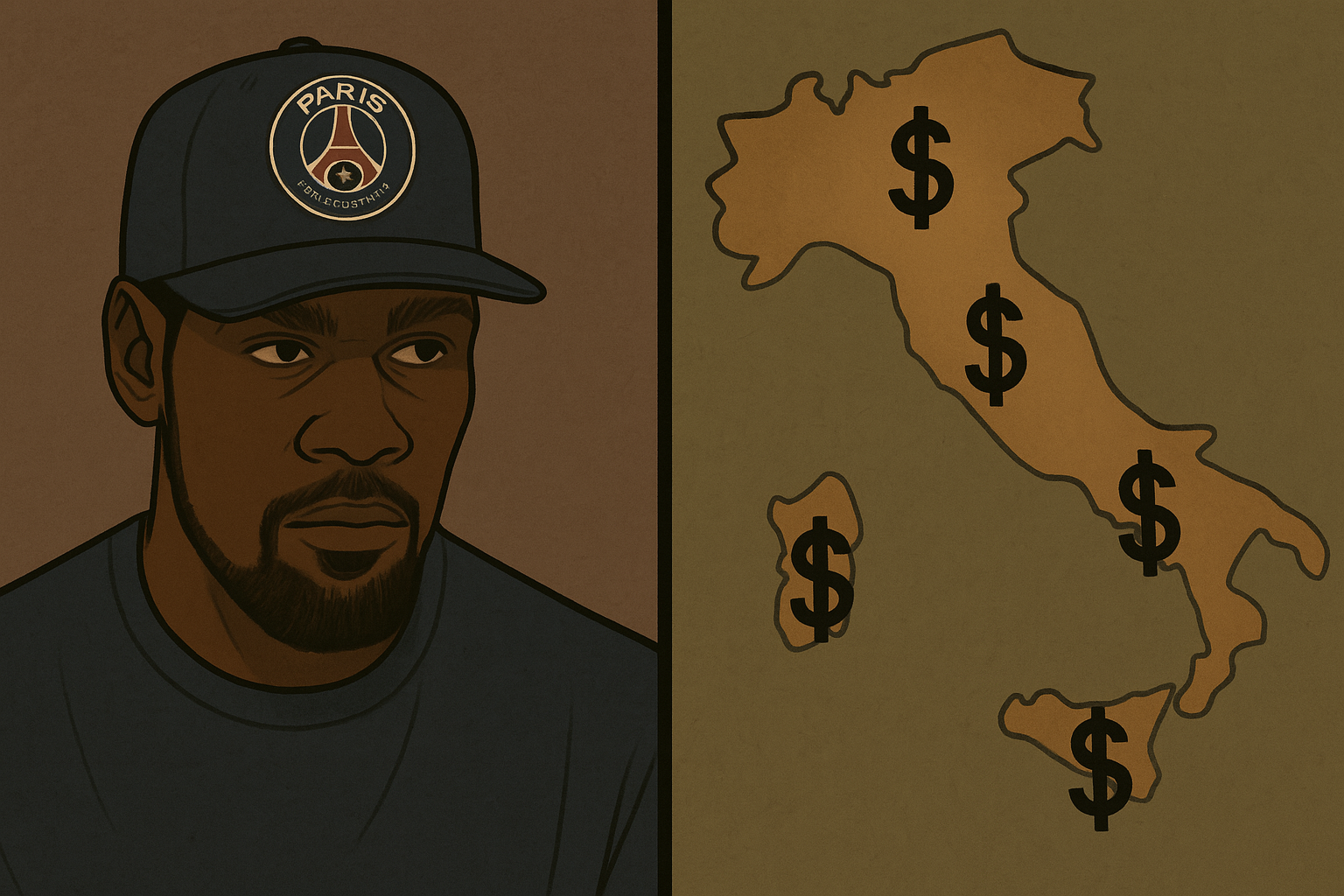
Let’s be blunt. Italy wasn’t always an easy sell. Back then, players dealt with aging stadiums and corruption that made Enron look efficient. Ultras, or wildly intense fans, threatened your life if you raised ticket prices. But somehow, a league that once scared away foreign investors is now dripping in American money.
With Friedkin at Roma, RedBird at Milan, and Pagliuca’s Atalanta group, over 70 percent of Serie A’s foreign-owned soccer clubs are backed by Americans, with groups led by hedge fund execs, media moguls, and analytics-focused investors who are not just here for a vacation in wine country… they’re patient investors, playing the long game.
So Why Italy?
Because it’s undervalued.
Because there’s history.
Because Premier League teams are waaaay too expensive.
Serie A is a fixer-upper with priceless bones. And American investors love a flip.
Here’s what they see:
Global brand potential: Roma, Milan, and Napoli are already international names. But most of these clubs haven’t even scratched the surface in North America and Asia.
Media upside: With the right distribution deals and docuseries (see: Welcome to Wrexham and All or Nothing), these teams can print money globally.
Basketball-style analytics: Clubs like Atalanta have leaned hard into Moneyball models. U.S. investors eat that up.
But here’s the twist no one’s really talking about…
Could Soccer Infrastructure Launch European Basketball?
Kevin Durant made headlines by investing in a French basketball club tied to PSG, a massive soccer brand backed by Qatar Sports Investments. That move was a blueprint. He bought into the ecosystem.
And now we have to ask…If PSG can do it, what about Manchester United or Arsenal or Roma?
The Model Already Exists
In Europe, it’s actually normal for major soccer clubs to have pro basketball teams:
Real Madrid has both La Liga and EuroLeague titles in its trophy case.
FC Barcelona regularly competes at the top of European basketball.
Fenerbahçe dominates both Turkish football and EuroLeague hoops.
Panathinaikos, Olympiacos, Crvena Zvezda…same deal.
These are multi-sport organizations. Imagine if the Yankees owned the Knicks but operated like one connected brand.
Italy hasn’t made that jump yet. But the foundation is already there.
Could Italy Be Next?
Milan and Rome are basketball hotbeds with deep history and fan support. Arena infrastructure exists in places like Bologna. Serie A clubs are actively seeking global revenue growth. Basketball offers a new product line. Youth development overlaps in both sports, with shared training facilities, staff, and operations that reduce cost and scale quickly.
There are hurdles:
Italy’s soccer and basketball federations don’t always align.
Basketball TV rights are still far below soccer.
Sponsorships lean heavily toward soccer.
But the potential payoff is massive for anyone ready to build smart.
KD is an Investment Guru
When Durant joined the ownership group of Metropolitans 92, the French club tied to PSG’s basketball project, he saw the PSG brand, the infrastructure, the media reach, and the talent pipeline. Then he made his move.
Durant saw PSG’s reach, the rise of European basketball, and a new generation of fans who live on their phones and crave something different…so he planted his flag.
Italy has that same blueprint. It just hasn’t been really touched yet.
Why Italian Basketball?
Because, like Serie A, it has all the bones. It just needs the right money and mindset.
Italy has a deep basketball culture. The fans are educated. The rivalries are intense. Bologna vs. Milan is war.
The country has produced NBA-level talent: Danilo Gallinari, Nicolo Melli, Simone Fontecchio, and Paolo Banchero’s bloodline.
There’s a steady pipeline of young players and clubs with legit development systems.
Virtus Bologna and Olimpia Milano both compete at the EuroLeague level, just below the NBA.
Italian cities offer international appeal, media potential, and ready-made infrastructure that doesn’t require starting from zero.
It lacked proper marketing, consistent financial backing, and a wave of modern outside investment…until now.
Why Investors Should Move In
You don’t need to win a championship to make this work. You need to tell the story, own the brand, and build the upside.
Here’s what the opportunity looks like:
Undervalued assets: You can acquire a stake in a competitive Italian basketball club for less than a mid-level NBA contract.
Streaming upside: The right docuseries or weekly content could push a EuroCup-level team into the global spotlight.
Player development = profit: Identify talent early, build a strong system, then either move players up to the EuroLeague or into the NBA pipeline.
Event activation: Connect the club with music, streetwear, summer runs, or YouTube creators.
Brand extensions: Treat the club as a cultural label. Launch lifestyle merch, media collabs, and partner with U.S. brands trying to go global.
The media rights may look small now. The right content and marketing will change that.
Follow the Formula: Buy the Team, Own the System
Let’s say a group steps in and buys into a team like Pallacanestro Trieste or Treviso. Cotogna Sports, led by former NFL player Connor Barwin, already did it with Trieste.
Here’s how to scale it:
Rebrand the look and feel.
Speak to 18 to 30-year-old fans around the world.
Bring in an American vet with personality.
Build a content team that knows how to move on socials.
Mic up practices.
Launch a YouTube channel that looks more like a creator brand than a traditional club.
Tie it all into the local soccer scene.
Suddenly, a club nobody in Philly ever heard of becomes a EuroLeague fan favorite with NBA scouts watching clips on TikTok.
The goal isn’t to beat Real Madrid on the court, but to win attention and build long-term value through relevance.
Why Italy, Specifically?
Italy has the fan base, the history, the rivalries, and the cities. Other European markets have already locked in their basketball infrastructure. Spain is mature. France is evolving. Germany runs clean. Turkey has heavy investment.
Italy has everything except the momentum… for now.
What KD Saw… You Should Too
If you’re looking at sports as an investor, skip the overpriced NBA teams and worn-out esports models.
Look at Bologna.
Look at Milan.
Look at Florence and Naples and Treviso.
Italian basketball is sitting there like a vintage Ferrari in Cameron Frye’s cliffside garage…flawless, iconic, and going absolutely nowhere until someone has the guts to turn the key.