WHAT I READ THIS WEEK
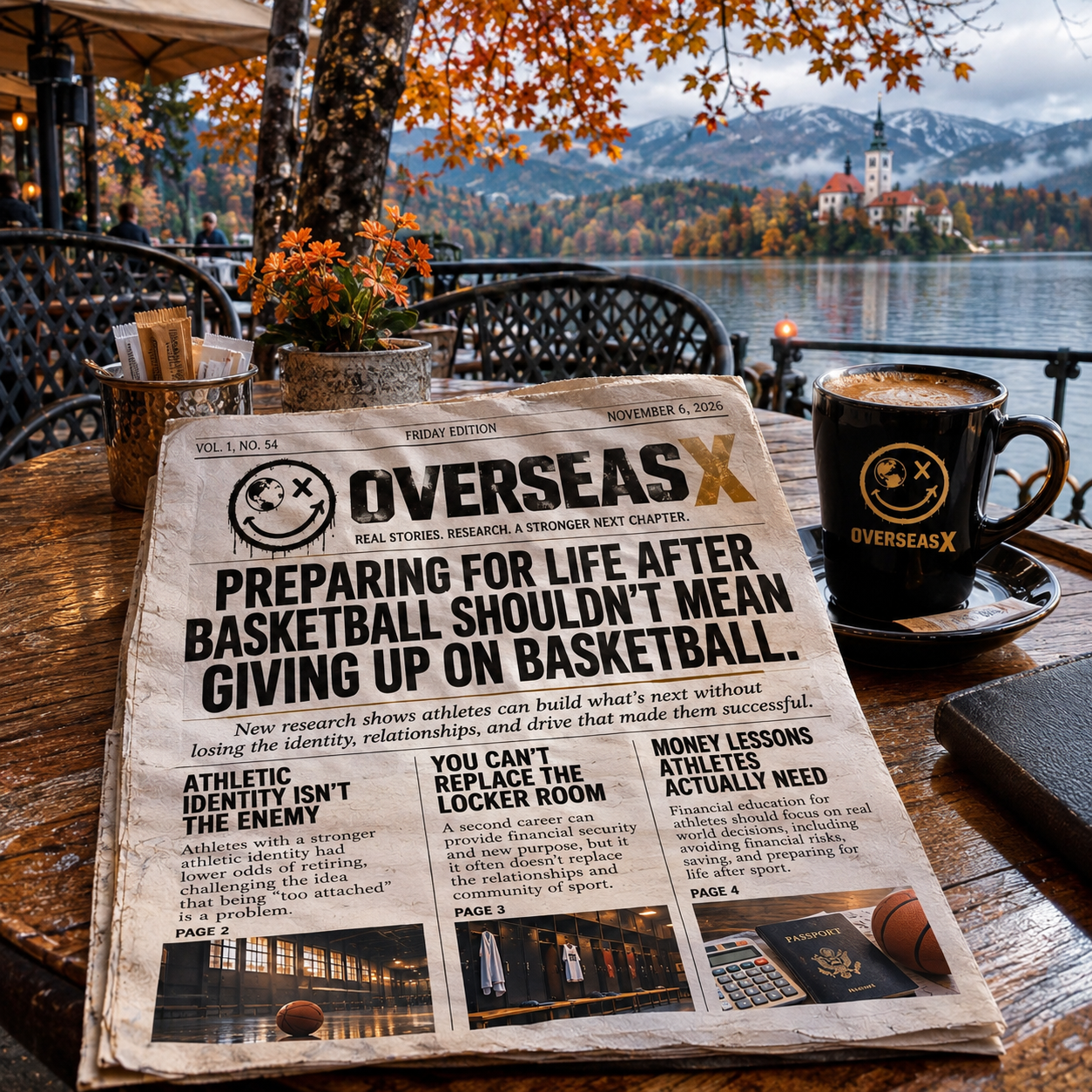
One of the strangest parts of playing professional basketball is that you spend every year fighting to stay in the game while everybody around you keeps reminding you that one day you'll have to leave it. They're right, obviously, but I never knew what the hell I was supposed to do with that information when I was sitting in an apartment overseas, refreshing my email to see whether my agent had another contract lined up.
This week I read three studies that had me thinking about how we prepare athletes for life after sports without making them feel guilty for still caring about the thing they've given their whole lives to.
The first one came out of Switzerland, where researchers followed 559 national team athletes and looked at their athletic identity, their health, and the support they had around them. The part that stuck with me was that the athletes with a stronger athletic identity had lower odds of retiring over the next two years. The researchers were careful to point out that this is an association and they can't say one caused the other, so I'm not going to stretch it into something it isn't. Still, it pushed back on something I've heard a thousand times, which is the idea that being too attached to basketball is automatically a problem.
When I was playing overseas, basketball decided what country I lived in, who I ate dinner with, what time I woke up, and whether I had any fucking idea what language the people around me were speaking. Of course it became a huge part of who I was. I'd be more worried about somebody who went through all that and came out the other side thinking of themselves as a person who occasionally played some ball.
The second study came out of New Zealand and talked to 16 retired elite athletes who had been working or going to school while they competed. Those second careers helped them with money and gave them somewhere to go when sports ended, which is exactly what everybody tells you to do. What surprised me was that the thing these athletes missed most was the relationships they had through sports, and having another career didn't do much to fill that hole.
That makes a hell of a lot of sense to me. You can help somebody get ready for another job by building their skills, cleaning up their resume, and showing them how to make money outside the game, and all of that matters. Replacing the locker room is a much harder conversation, because nobody hands you a plan for losing the group of people who understood your life without you ever having to explain it.
The third study looked at financial literacy for professional team sport athletes. Researchers interviewed 12 people who influence how athletes make financial decisions, and they landed on four areas that matter most: avoiding unethical financial behavior, saving, keeping control of your money, and preparing for life after sports.
Reading that, I kept thinking about how we teach athletes about money in the first place. Telling a 23 year old to save his checks sounds great in a workshop. It gets a lot more complicated when that same player signs overseas, gets paid late, moves to a new country, pays his agent, and gets released two months into the season with half of what he budgeted for. Those are the situations financial education for athletes should be built around.
None of these studies looked at the same group of people, and none of them proves there's one right way to get somebody ready for retirement. Reading them back to back did make me think about what we're building at OverseasX, though. I want to help athletes build a bigger life around their identity as a player while they're still playing, and I have no interest in asking them to stop seeing themselves that way. That means learning how contracts work, understanding where your money goes, picking up interests outside the gym, building relationships with people who couldn't care less about your stat line, and figuring out what opportunities could be waiting when the game ends. And you shouldn't wait until a team tells you your services are no longer needed to start thinking about any of it.
The basketball part of your life is going to change one day, and when it does, everything you built around it can come with you.
With OverseasX, you'll never have to walk this journey alone.
Studies I read this week:
Continue or Quit? Career Resources and Retirement Among Swiss Elite Athletes
https://doi.org/10.1080/10413200.2026.2733249New Zealand Elite Dual Career Athletes' Perceptions of Their Retirement Transition
https://doi.org/10.1080/1612197X.2026.2652860Beyond the Playing Field: Financial Literacy Competencies for Professional Athletes in Team Sports
https://doi.org/10.3390/ijfs14030068