Two Passports, Same U.S. Tax Reality
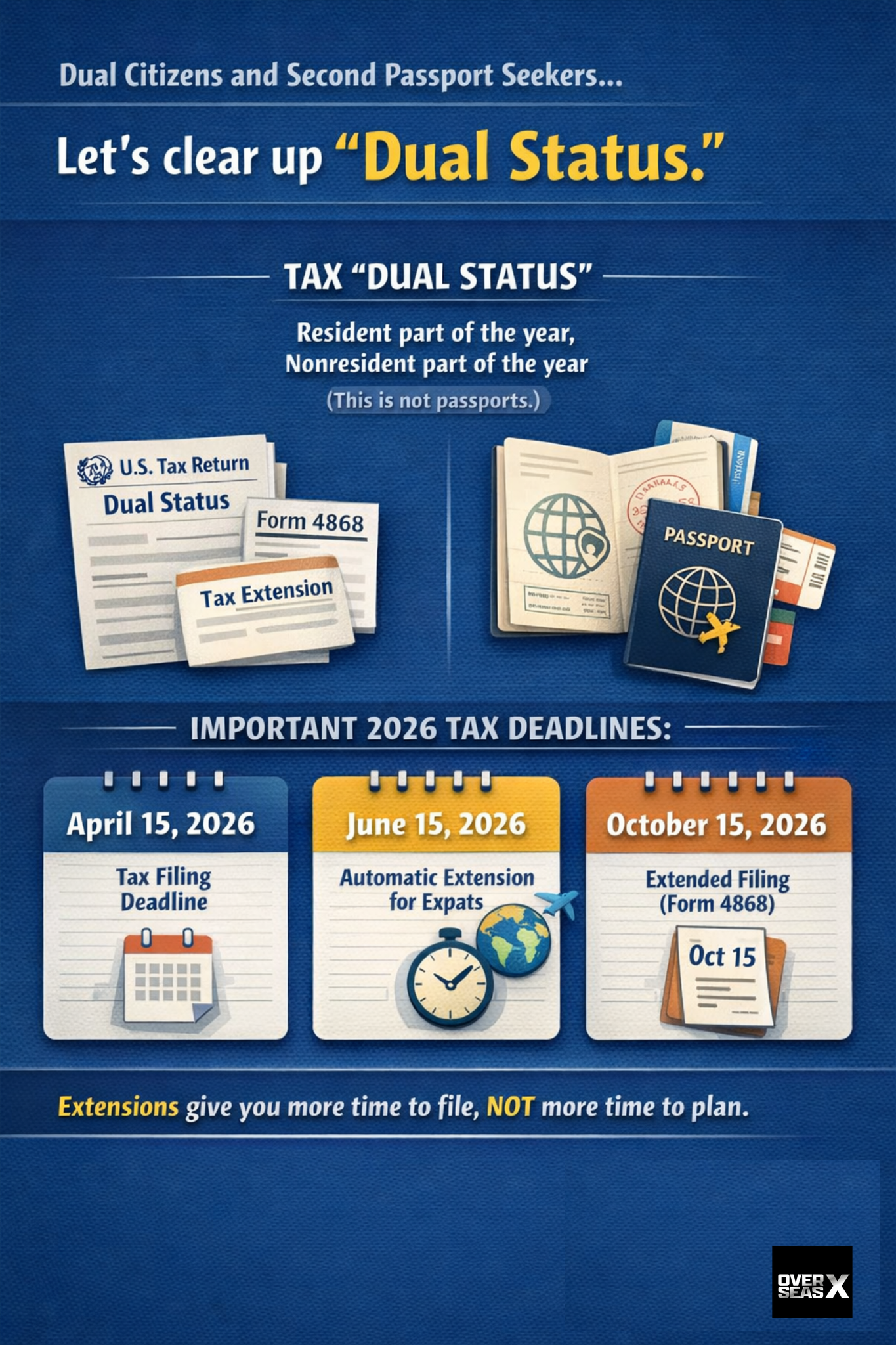
Some of you in here are dual citizens already, and some of you are thinking about a second passport because you’ve got another country in your ancestry. That can be a real asset long term, especially if you’re trying to build a life overseas without constantly feeling like you’re on borrowed time. If you’re serious about exploring that, hit up @David Lesperance JD because that process is way too important to guess your way through.
Now, I want to clear up a phrase that gets athletes confused all the time.
When people say “dual status,” they usually mean one of two things, and mixing them up can turn into a headache.
Dual citizen is not the same thing as “dual status” on a tax return
If you have two passports, that’s dual citizenship.
If you’re a U.S. citizen, having a second passport does not change the basic U.S. tax reality. You still file a U.S. return and report your worldwide income, even if you live overseas and even if you get paid overseas.
So if you’re a dual citizen and you’re asking, “How do I file my taxes?” the answer is usually…you file like a U.S. taxpayer, and then you look at the common overseas tools like the Foreign Earned Income Exclusion or the Foreign Tax Credit depending on your situation.
That is different from “dual status.”
What “dual status” actually means
“Dual status” is a specific tax residency concept where someone is treated as a U.S. resident for part of the year and a nonresident for the other part of the year. It comes up when someone changes U.S. tax residency status mid year.
Most athletes who are U.S. citizens are not “dual status” just because they have two passports.
Deadlines athletes actually need to track for 2025 returns filed in 2026
Here’s the part you can post on your wall and not overthink.
April 15, 2026 is the standard filing deadline for most people.
If you are a U.S. citizen or resident and you are living abroad on that due date, you generally get an automatic two month extension to June 15, 2026, but that does not mean you should ignore planning, because timing and payment rules can still bite you.
If you need more time beyond that, you file an extension, which usually pushes the filing deadline out to October 15, 2026.
One thing athletes mess up a lot…an extension gives you more time to file, but it does not magically give you more time to pay anything you might owe, so do not treat extensions like a free pass.
Quick self check so you know which lane you’re in
If you’re a U.S. citizen with two passports…your lane is normal U.S. filing, plus overseas considerations.
If you are not a U.S. citizen and you changed residency status during the year…that is where “dual status” tax filing can become relevant.
If you are talking about getting a second passport, residency, or ancestry routes…that’s immigration, and that is where you talk to David.
Comment so we can steer you without guessing
Comment tax if you mean filing your return as a U.S. taxpayer overseas.
Comment status if you think you might be a dual status filer because your U.S. tax residency changed.
Comment passport if you’re exploring a second passport through ancestry.
Whatever lane you’re in…you’ll never walk alone.