The Layers Under the Lights
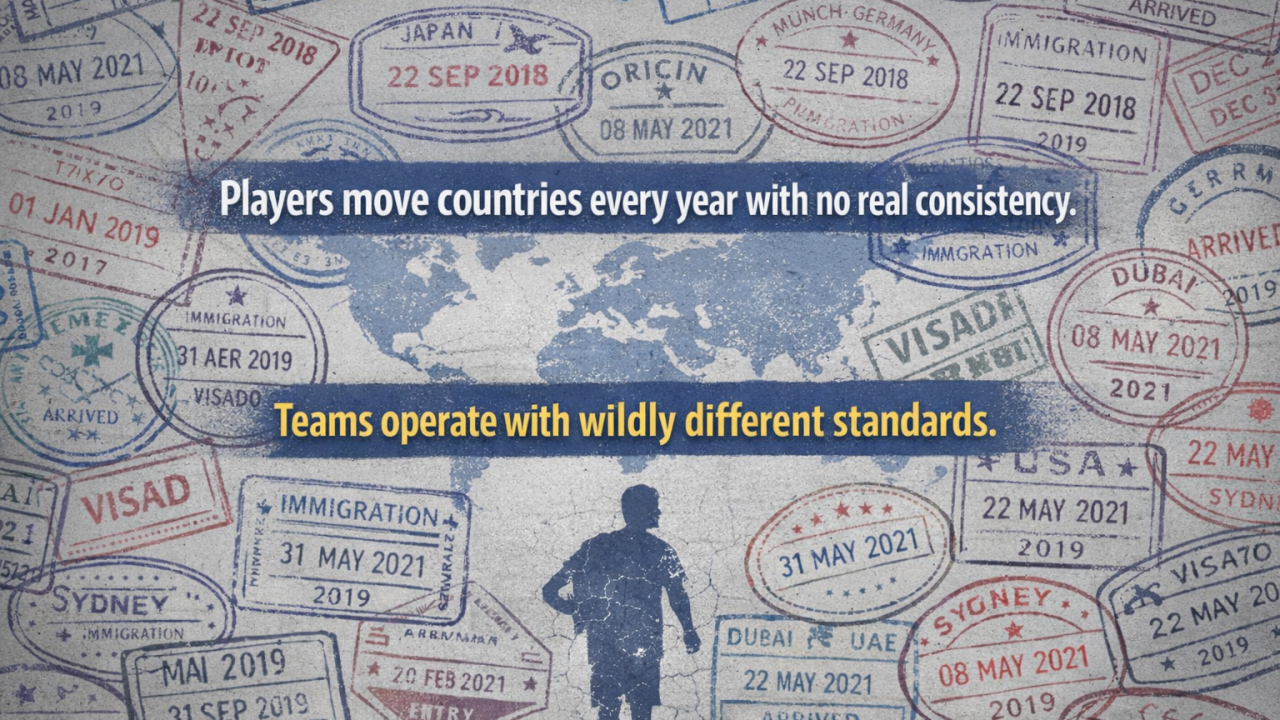
Overseas sports is a global labor market that still runs on a very outdated infrastructure.
Players move between countries every year with no consistency. Teams operate with wildly different standards. Healthcare access changes the second you cross a border, while performance support is inconsistent. And let’s just ignore the paperwork and records over there, because it’s a fucking mess.
And this is a good thing if you are an investor, operator, or partner…this creates a lane that keeps growing without needing to buy a club. The opportunity lives in the systems that follow the athlete…not the jersey.
When people talk about overseas investment they usually mean leagues, team, arena or TV deals.
I get why. I have chased that cortisone too. I tried helping one investor who wanted to create a Banana Ball style experience overseas. The idea was genius. It also fell through, and I ended up stuck in a three month time suck with nothing to show for it.
That is why I pay attention to what sits underneath.
The bigger investment is right there, but it lives below the surface. It is a repeatable service layer that supports athletes wherever they play.
That layer looks like mental performance, resilience tooling, sports medicine access and recovery support. A place where you can get second opinions, continuity of care, and medical record portability.
If you can deliver those things consistently across borders…you own a valuable piece of the ecosystem.
Why This Matters for Investors
1. A Scalable, Borderless Customer Base
Overseas athletes are already distributed. They already rely on remote communication. They already pay for solutions that reduce uncertainty.
That means products built around access and continuity can scale internationally faster than traditional market by market models.
2. Recurring Demand in a High Consequence Environment
Injuries do not wait for business hours. A bad decision can wreck a season and a mental spiral can wreck a contract.
Solutions that reduce downtime and confusion have direct financial value for athletes and stakeholders.
3. Distribution Channels Already Exist
Agents exist already. Academies exist already. Clubs exist already. Player networks exist already. Platforms exist already.
You do not need to invent the funnel. You need to build something worth plugging into it.
And this is not some hypothetical wishlist.
These three lanes already exist inside our community right now. Bryan Fetzer and PsyOPTIMAL are already here. Adam Halpern and WaveOn are already here. Stacy Case and Sideline Surgeons are already here. So when we talk about this infrastructure layer…we are pointing at what is already being built in front of us.
Bryan Fetzer, Dr. Wayne Chappelle and PsyOPTIMAL
The mental side overseas is this constant buzz of uncertainty that never really stops. You can play well and still feel mentally exhausted, because everything around the game keeps shifting, and you are always one butterfly wing flutter away from losing your entire world.
On top of that, overseas teams spend so much money before a player ever logs one minute. Flights cost money…immigration costs money…housing costs money. Then you still have the same scary question:. Will this import actually fit?
That is where Bryan Fetzer and Dr. Wayne Chappelle operate through PsyOPTIMAL. PsyOPTIMAL is built for this exact kind of problem. They position themselves as a precision based assessment and consultation partner for mental performance and well being. Their evaluations and consultations help teams make high impact decisions, including hiring the right people and developing team culture. Their sports offering is framed around customized mental performance assessments, including ACE + Cohesion, Sports Tactics Inventory, and Sports Wellness, with data driven insight that turns into actionable strategy for athletes and staff.
Here is why that matters overseas. Most overseas teams are making decisions on, arguably the most important player on their team…the Americans, with incomplete information. They might know the stat line and have studied the tape and scoured their socials, but they usually do not know how a player handles stress, role change, conflict, and cultural whiplash once the honeymoon ends. A mental readiness and cohesion evaluation layer can reduce that risk, because it gives a clearer view of what is happening above the neck before the club commits travel and relocation costs.
I am not going to claim they do the “most comprehensive mental and physical evaluation ever,” because I cannot verify that publicly. I also cannot verify a list of “many high profile college basketball programs” without you naming the programs or sharing a source. What I can say is that PsyOPTIMAL explicitly markets precision assessments and decision support for teams. That is the exact lever overseas clubs need, because roster mistakes overseas cost you in logistics, chemistry and time, which you cannot get back.
So the investment angle is simple…if you help overseas teams predict fit earlier and avoid bad import bets, you can become a gold mine for clubs that are tired of paying for expensive trial and error. That final part is an inference, but the cost problem is real, and the decision support positioning is clearly stated by PsyOPTIMAL.
Adam P. Halpern, MA, AT-Ret 💡 and WaveOn Health
Overseas injuries are where the story gets interesting, real quick. The pain is never the scariest part. That’s the uncertain fog that lingers, because you do not know if you are getting the right information from the right people at the right time.
The real pain point overseas is control. Teams control your pay. They control when you get your pay. Teams also control most of the medical system you are stuck inside of, which means they control the process of preventing injuries and recovering from them. If the team controls the doctors and the trainers, and they say you can play through something, you usually end up playing through it. You only get leverage when you can get a second opinion from someone who is not tied to the team’s infrastructure.
That is why the investment lane here is access. Athletes want fast clarity from trusted professionals, especially when they are far from home and every decision has contract consequences. A platform that connects athletes to guidance, prevention, recovery support, and second opinion pathways can scale because the need repeats in every league and every country, every single year.
The product becomes valuable when it reduces downtime, reduces uncertainty, and keeps the athlete from getting stuck in a bad loop of guesswork.
STACY CASE ase and SIDELINE SURGEONS
Second opinions sound like a luxury until you’re hurt overseas and realize your career is no longer in your hands. The team wants you available, but all you want is your body protected, because your body is the entire business.
The problem is simple and kind of brutal. We are not trained to read an MRI. We cannot always tell the difference between this is sore and I probably need a new knee. A team can tell you what they want, and if you do not have a trusted outside voice, you are stuck making decisions off somebody else’s agenda.
That is why Sideline Surgeons matter. They help athletes get connected to specialist level opinions. They help organize and transfer medical records, so the right people can see what is going on. They help create continuity, so you are not restarting the entire process every time you switch teams, switch countries, or switch doctors.
Athletes need trusted medical clarity and clean records that can move digitally. They need a process that keeps decisions grounded when the local system feels unfamiliar and the clock is ticking.
Sideline Surgeons fits because this is a high trust problem. Once an athlete finds a system that makes medical decisions simpler and more credible, they tend to stay loyal. That trust can follow them across teams, across countries, and across different stages of a career.
Overseas sports are only getting bigger and so is the money. That means the opportunities are only getting larger for the people living inside it. These three solutions are not nice to have, they are protection. Career insurance for athletes who have been forced to gamble on systems they do not control. If you are an investor who understands that, you stop chasing the shiny stuff. You build the layer that everybody ends up needing.