Adjusting to Your Role Overseas From Scorer to Winner
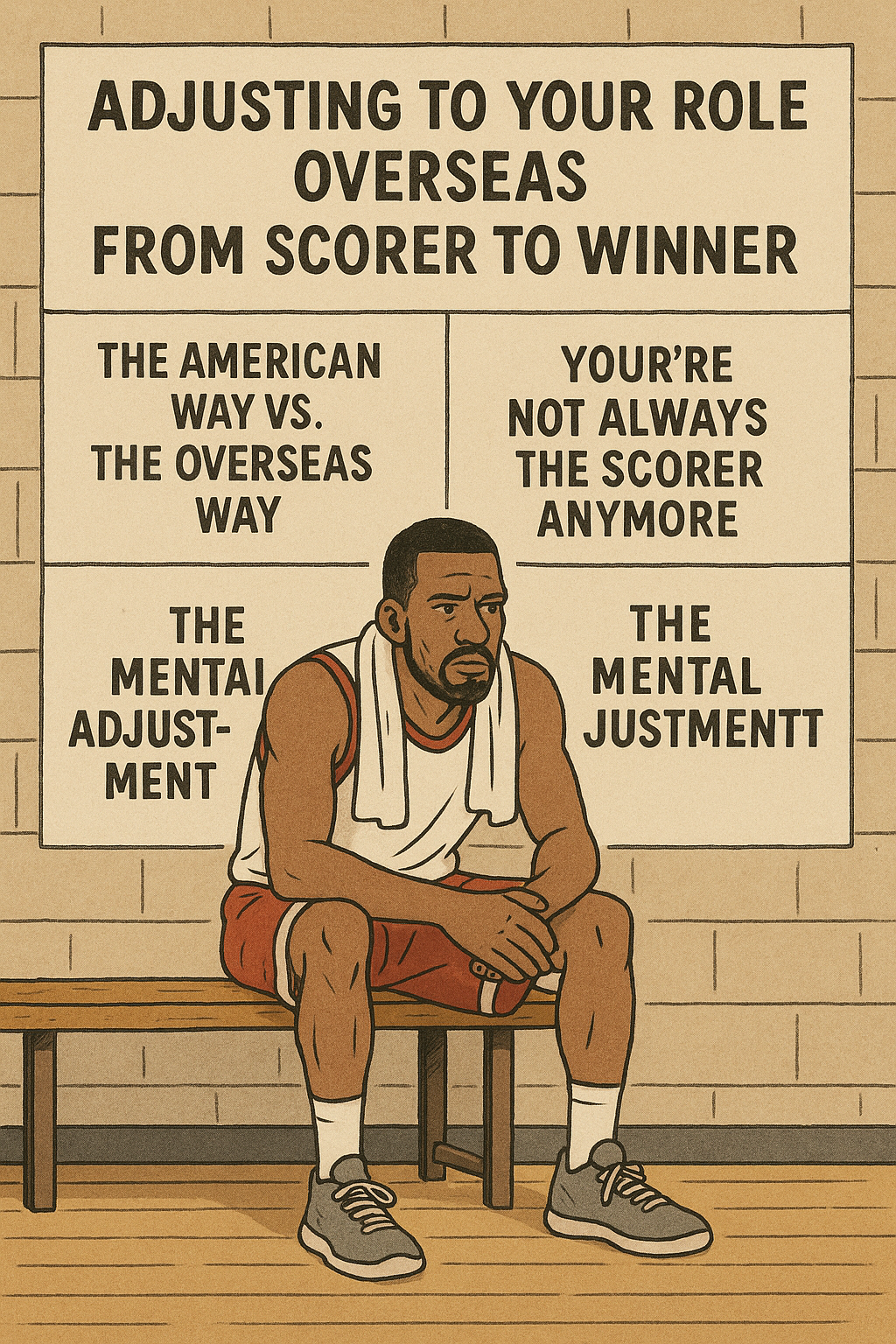
When you first get overseas, your instincts tell you to go get buckets. That’s what got you the contract. You averaged twenty a game in college and now you’re thinking your team brought you in to do the same thing against opponents with fancy accents. But the reality is, the higher you go in overseas basketball, the less it’s about your scoring and the more it’s about whether you can help your team win in ways that don’t always show up in the stat sheet.
The American Way vs. The Overseas Way
In the US, basketball has always been a showcase sport. AAU through high school, everything’s designed to highlight who can score the most, break somebody down one-on-one, or inexplicably pull up from thirty feet. Even in college, coaches lean on their stars to take twenty shots a game. The best scorer usually gets the shine, the attention, and the contract.
Overseas basketball flips that on it’s ass. You walk into a gym in Spain or Germany, and the whole structure of the game feels different. The ball moves. Possessions are shorter. Defenses are smarter and more physical. Coaches don’t want some hero jacking twenty-five shots. They want balance. They want execution. And if you’re the American, you’re expected to fit into that system, not bend it to you.
You’re Not Always the Scorer Anymore
Here’s the wake-up call: every league has scorers. Some of them are locals. Some are veterans who’ve been around for ten years. Your coach might not need you to put up thirty a night. He might want you to rebound, defend the other team’s best guy, or run the pick-and-roll and find shooters.
That can feel like an identity crisis, especially when you’ve always been the go-to option. You walk into practice thinking, “I should be dropping twenty easy,” but the coach is pulling you aside and telling you your role is to crash the boards and set screens. At first it feels like a demotion, but the truth is, it’s growth.
Winning Looks Different Overseas
Overseas, winning means sacrifices. You’ll notice it quickly…teams that go far in the playoffs aren’t always the ones with the most talented Americans. They’re the ones whose Americans buy into roles, make extra passes, and know when to get out of the way.
I’ve seen guys lose jobs not because they couldn’t score, but because they couldn’t adjust. They refused to accept being the second option. They pouted when their shot count went down. Overseas clubs don’t have patience for that. There’s always another player ready to take your spot.
The Mental Adjustment
The hardest part is the mental adjustments. Back home, you’re used to being celebrated for scoring. Overseas, you have to rewire your brain. You start to realize that an offensive rebound in the fourth quarter might mean more than a heat-check three. Diving on the floor might keep you around longer than taking fifteen shots.
It feels weird at first. You might even catch yourself looking at the box score after a game thinking, “Damn, I only had eight points.” But then you realize you also had twelve rebounds, three assists, a steal, and your team won by five. The coach pats you on the back, the GM smiles, and your paycheck clears. That’s impact.
How to Adjust Without Losing Yourself
The adjustment doesn’t mean you stop scoring altogether. It just means you score smarter. Pick your spots. Know when your team needs you to go get one, but also know when swinging the ball is the better play. Overseas fans and coaches love players who can do both, put the ball in the basket when needed and keep everyone else involved the rest of the time.
The tough part is learning how to balance who you were back home with who you need to be overseas. You don’t erase your game, rather you expand it. That’s what separates the guys who flame out after a year from the ones who build ten-year careers.
Closing Thought
At the end of the day, adjusting to your role overseas needs humility. Realizing that basketball isn’t the same everywhere, and if you want to stick, you’ve got to grow. You might score less, but you’ll end up impacting the game more. And when you walk off the floor after helping your team win on the road in a packed European gym, you’ll understand something you never did back home. Sometimes the best role you can play is the one that doesn’t show up in your stat line.